
.webp)

So, you’ve started the search for a home EV charger. Now you’re getting inundated with questions about your vehicle and your home that you never thought you’d have to answer. Kilowatts, charging speeds, AC power, DC power... it’s enough to make you close your laptop and put it all in the too hard basket.
One of the most common arrgh moments in this process is understanding whether your home is on single-phase or three phase power (and what the heck that even means).
What is a single-phase power supply?
Too long, didn’t read
Single-phase power supply means you have one live power cable coming from the grid and into your home. It is the most common set up and is perfectly adequate for standard residential homes.
The majority of homes in Australia run on a single-phase power supply. This means the power is distributed to your home via one live cable. That single wire connects to your home's distribution board (sometimes also called a switchboard), which then divvies up the energy to the various appliances and parts of your home.
In Australia a single-phase connection has a standard maximum capacity of around 14.5-15 kW. That means the total consumption of energy in your home at any one time can’t exceed that amount (and if it does, the most common outcome is a tripped circuit breaker). In some circumstances exceeding the capacity can result in damage to your appliances or fire risk.
The good news: 15 kW is more than most residential homes need. Even when your household is at its busiest you would be unlikely to exceed your homes capacity. For a bit of context, here’s a few common household appliances and their average power consumption:
- Refrigerator - Usually runs at about 0.1-0.4 kW (100-400 watts). Modern energy-efficient models tend to be on the lower end, while older or larger units use more.
- Microwave oven - Typically uses 0.6-1.2 kW (600-1200 watts) when actively heating food.
- Electric jug- Uses about 1.5-3 kW (1500-3000 watts) while boiling water. They draw a lot of power but only run for a few minutes.
- Washing machine - Generally uses 0.3-1.5 kW (300-1500 watts) depending on the cycle. Heating water uses the most energy.

Can you fast charge an EV at home on single-phase power?
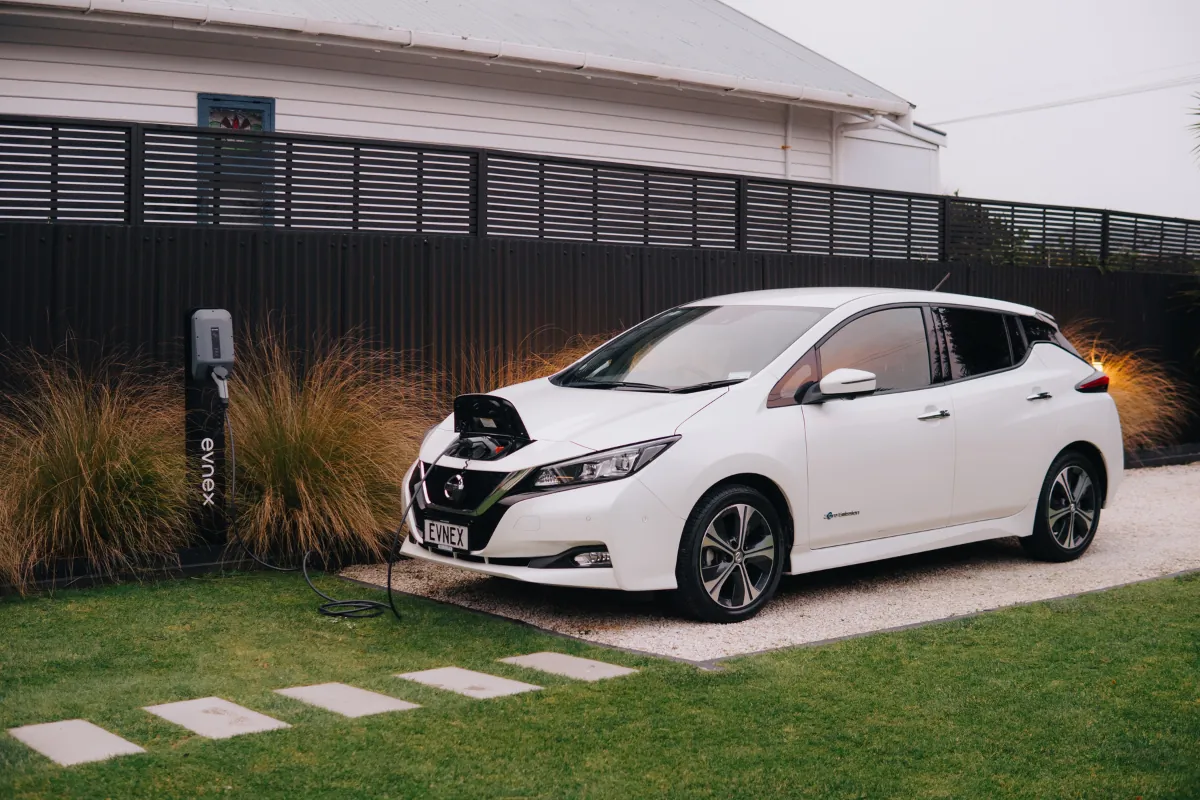
You can! In fact, at Evnex we have thousands of customers who have installed one of our smart home EV chargers on a single-phase power supply. Most single-phase EV chargers deliver up to 7.4kW of power to your vehicle - for those that just care about the outcome: that’s up to 50km of range per hour of charging.
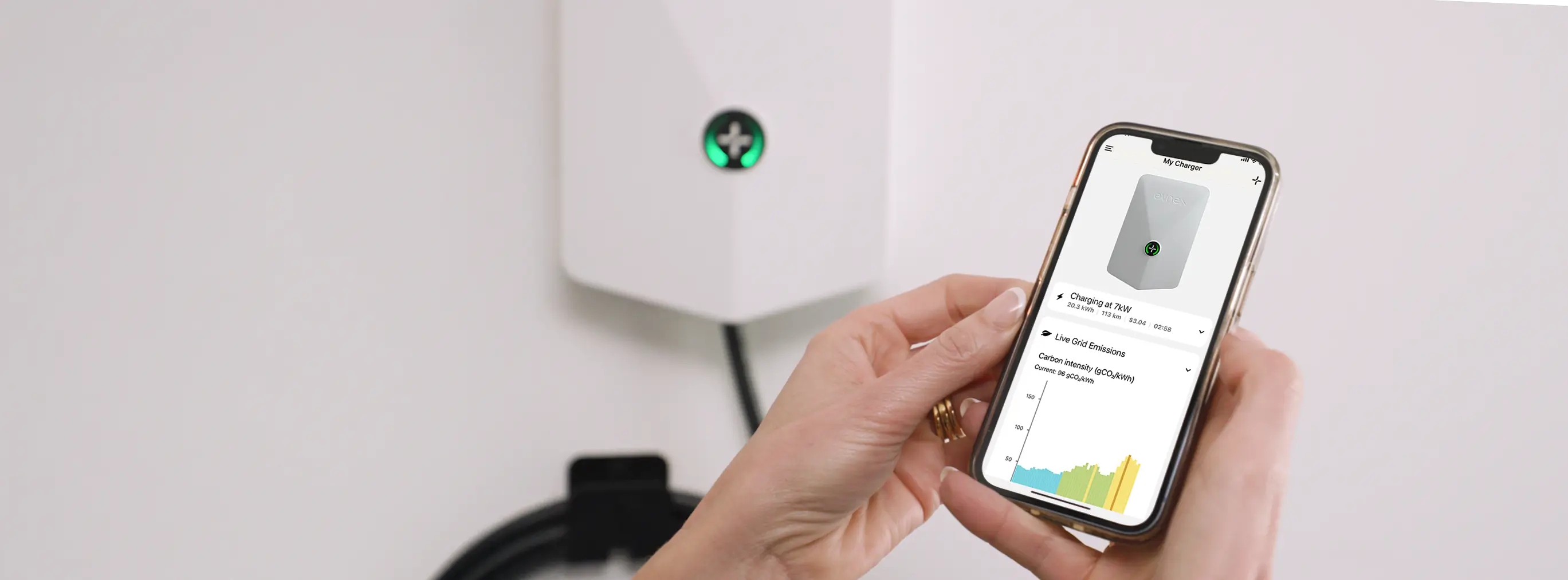
Before you start sweating - yes, 7.4kW is around half of your home's maximum capacity, which can put a little more pressure on things during those busy evenings when you’re cooking dinner, washing machine is on, and someone's having a shower. That is where the magic of having a smart EV charger comes in; they are able to monitor the demand on your home at any given time, and automatically throttle down your charging speed when things get busy, ensuring you don’t overload your home.
A quality smart charger should also allow you to schedule your EV to start charging when you know power usage is low in your home. In the world of electricity retailers this is often called ‘off peak’ timing, and usually means cheaper power rates (and therefore cheaper car charging costs).
What is three-phase power?
Too long, didn’t read
Three-phase power supply means you have three live power cables coming from the grid and into your home, which allows you to access more power. It is less common in residential settings, and mostly useful if you’re running large appliances and motors.
Three-phase power simply means there are three power cables delivering electricity to your home instead of one. While each individual cable typically has a lower capacity than a single-phase connection, combined they give your home significantly more total power capacity - usually at least 30 kW, and often more.
Generally, three-phase power is not needed in a standard residential setting. It’s typically only installed in homes if they have a genuine need for it, like they are running large machinery or have high voltage motors running such as a swimming pool pump.

How does three-phase power affect home EV charging?
Having three-phase power in your home gives you a few more options when it comes to choosing a home EV charger.
You can install a single-phase charger, which will deliver up to 7.4kW (or roughly 50km per hour) to your vehicle as it will only be connected to one of your three phases. Or you can install a three-phase home EV charger, which is able to draw power from all three of your home’s phases’, and can deliver up to 22kW of power to your EV (about 120km of range per hour of charge).
It’s also important to keep in mind that your vehicle will also have a maximum charging rate, which will affect how fast your home EV charger can deliver power to your vehicle. Some older models of the Nissan Leaf will only charge at a maximum rate of 3.6 kW, so even if you have three-phase power, installing a faster 22kW three-phase charger isn’t going to deliver power to your vehicle any faster than a single-phase home EV charger would.
Do you need three-phase power for home EV charging?
For most homeowners, the answer is no. Single-phase power with a 7.4kW charger delivers reliable overnight charging that will have your EV ready each morning. That's enough to add around 50km of range per hour, which means even if you've had a big day of driving, you'll wake up fully charged.
Three-phase power only becomes relevant if you're running multiple high-demand appliances, have a large property with substantial power needs, or want the absolute fastest home charging speeds available. For the average household with one or two EVs, a quality single-phase smart charger will do the job beautifully.
The key is choosing a charger that works intelligently with whatever power supply you have. That means built-in overload protection, the ability to schedule charging during off-peak times, and smart features that automatically adjust to your home's available capacity.
Not sure what power supply you have? Your electricity bill or switchboard should tell you, or any qualified electrician can confirm it in minutes. If you're still unsure what charger suits your setup, get in touch and we'll help you find the right fit.
